
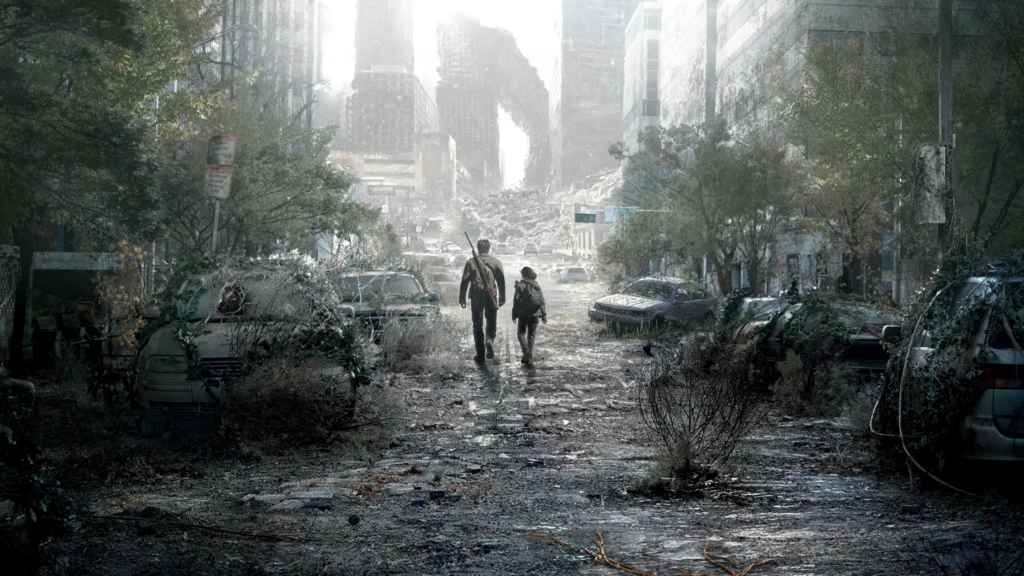
When The Last of Us Season 2 premiered in April 2025, the impact was immediate — both emotionally and culturally. The HBO series, which received global acclaim in its first season, returned with the promise of deepening Joel and Ellie’s moral struggles. It delivered. But that same narrative weight that critics praised became divisive among fans.
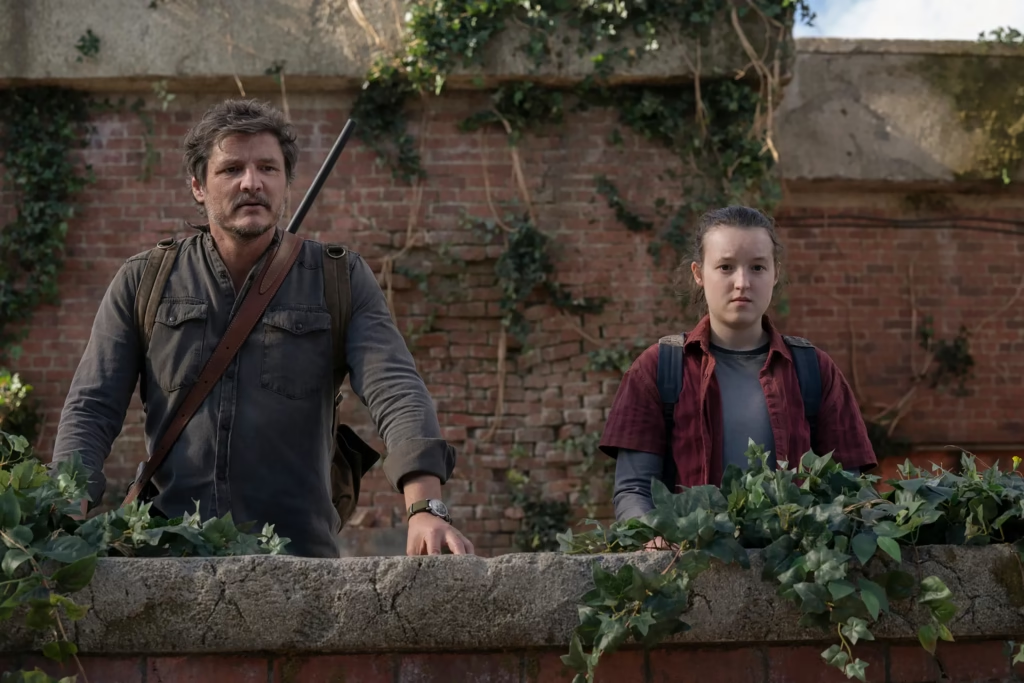
This time, the story moved with more boldness. Loosely based on The Last of Us Part II, the plot dove into heavy themes like revenge, grief, and forgiveness — without offering easy answers. With Pedro Pascal and Bella Ramsey delivering sharp performances, the season leaned into long pauses, dramatic silences, and sudden shifts in focus. For some, it was a masterclass in prestige TV. For others, a betrayal of the emotional bond they had with the main characters.
Joel and Ellie: Absences That Echo
One major point of criticism was the screen time distribution. Joel and Ellie, the emotional pillars of Season 1, stepped aside to make room for new characters like Abby (played by Kaitlyn Dever) and Dina (Isabela Merced). While this decision stayed faithful to the source material, it frustrated many viewers. Online reactions showed a deep sense of abandonment, especially after full episodes focused solely on secondary arcs.
Episode six, “The Price,” stood out. In it, Joel faces the consequences of his past actions while Ellie is forced to make irreversible decisions. The result was one of the most powerful television moments of the year. Still, the lack of direct connection to the earlier storylines and the slower pacing alienated viewers hoping for constant intensity.
Critical Acclaim vs. Audience Response
The media largely applauded the season. The Verge called it “a mature example of bold creative adaptation,” while Variety praised Craig Mazin’s direction for “emotional fidelity to the game and artistic freedom on screen.” On Rotten Tomatoes, the season holds an 87% critics’ score but only a 64% audience score.
This gap reflects a clash of expectations. While critics analyze structure and nuance, viewers craved emotional continuity — and many felt the season’s fragmentation left them cold.
The Future with Abby, Without Druckmann
HBO has confirmed: The Last of Us will return in 2027. But key changes are coming. Neil Druckmann, the series co-creator and original game director, will step away to focus on new projects at Naughty Dog. His departure marks a delicate transition — he was the link between game essence and TV storytelling.
Craig Mazin, now the sole showrunner, says Season 3 will be split into two arcs: one centered on Abby, the other on Ellie. “The show doesn’t aim to please,” Mazin declared, “but to challenge.” While artistically valid, the statement has deepened skepticism among longtime fans.
TV and Gaming: A Growing Symbiosis
As the series evolves, the The Last of Us Part II game received a remastered edition with a “chronological mode,” letting players experience the events as they unfold in the show. Reception has been largely positive, with fans praising the effort to bridge game logic and TV narrative.
Interestingly, many frustrated fans returned to the original game to “feel again” the emotional connection with Joel and Ellie — a testament to how deeply the duo resonates across media.
Controversies: From Representation to Polarization
The inclusion of diverse characters — such as Dina, a queer Jewish woman, and Lev, a trans teenage boy — sparked online backlash. Some fans accused the show of “pushing an agenda.” HBO and cast members stood firm, defending creative integrity and the importance of representation.
Critics like Emily VanDerWerff (Vox) noted, “The outrage isn’t really about diversity — it’s about discomfort with protagonists evolving and stepping aside.” That insight underscores today’s entertainment tension between innovation and nostalgic comfort.
What to Expect in Season 3
Set for release in early 2027, the next season will explore Abby’s three days in Seattle, mirroring Ellie’s emotional journey. The tone promises to be even darker and more introspective.
Sources say Pedro Pascal and Bella Ramsey will return, but only in flashbacks, dreams, or symbolic visions. The goal: usher in new lead characters while honoring the emotional legacy of Joel and Ellie.
Conclusion
The Last of Us walks a courageous and emotionally complex path. Season 2 is both powerful and polarizing — demanding patience, reflection, and emotional resilience from its viewers. If Season 1 was about physical survival, Season 2 is about moral endurance. And in that arena, no one leaves unscathed.
Between applause and backlash, one truth remains: The Last of Us is not just a TV series — it’s an ongoing conversation about pain, choice, and the human ability to keep going even when everything falls apart.

The Truth About Ben Askren: Beyond the Octagon
Ben Askren, a well-known name in mixed martial arts (MMA), has sparked curiosity about his…
New Batman Trailer Sparks Shock and Awe
The latest trailer for the new Batman film delivers powerful visuals and intense atmosphere. Bruce…

11 Injured in Terrifying Knife Attack at Walmart
On Saturday afternoon, July 26, 2025, a 42-year-old man began randomly stabbing shoppers inside a…
From Iconic Star to Free Spirit: Lisa Bonet’s Rise
Lisa Bonet stands out as one of America’s most fascinating pop culture figures, known not…
One Final Shot: Chris Paul Returns Home
For over two decades, Chris Paul has embodied excellence, leadership, and sharp intelligence on the…
Fans Mourn the Sudden Death of TV Star Warner
The entertainment world is mourning the loss of Malcolm-Jamal Warner, beloved for his role as…