
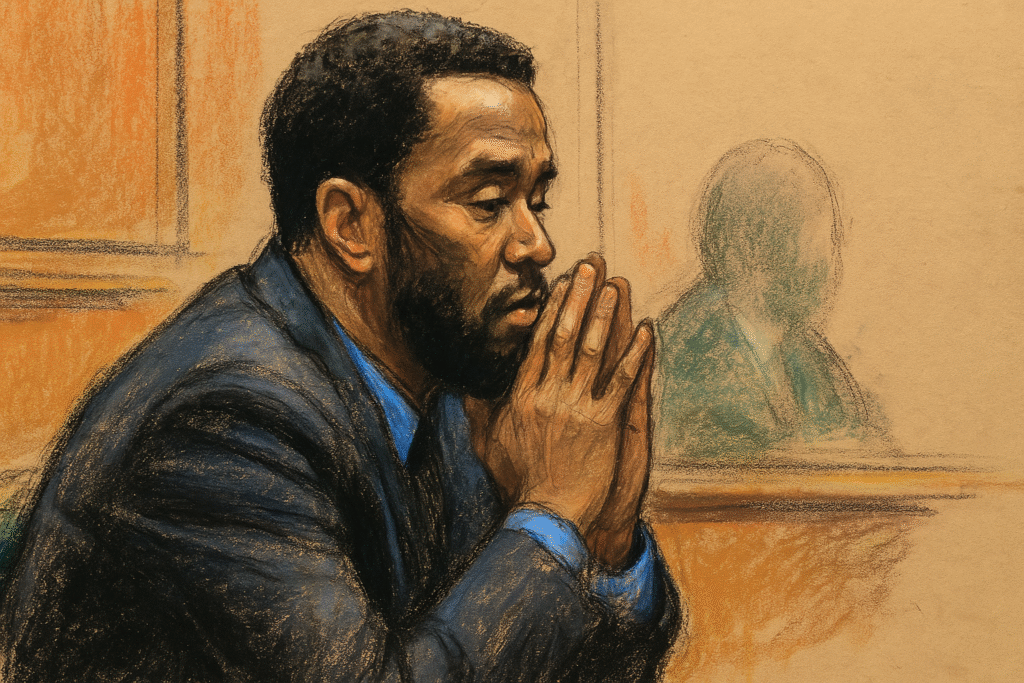
As the world closely follows the trial of Sean “Diddy” Combs, one legal term stands out: racketeering. But what does this word actually mean, and why is it so crucial in this case?
In the U.S. justice system, racketeering refers to a pattern of coordinated criminal activity, usually carried out as part of an organized group. It’s not about isolated incidents—it points to repeated actions with a common goal: profit, often tied to illegal operations that function like a business.
The charges against Diddy go far beyond individual offenses. Prosecutors claim he was at the center of a criminal network known as the “Combs Enterprise”—an alleged operation that facilitated sex trafficking, extortion, drug use, and acts of violence. The key argument is that these were not random acts, but part of a well-organized and ongoing system, led and controlled by Combs.
To legally sustain a racketeering charge, prosecutors must prove:
- The existence of an organized group—or enterprise;
- At least two criminal acts committed within a 10-year period;
- That these acts were connected and part of a continuing pattern.
This framework is based on the RICO Act (Racketeer Influenced and Corrupt Organizations Act), a federal law created in 1970 to dismantle organized crime. The power of RICO lies in its ability to tie together different types of crimes—like assault, trafficking, or bribery—as part of a larger, coordinated scheme.
In Diddy’s case, prosecutors are leveraging RICO as a powerful legal tool. Their aim is to show that he didn’t just commit crimes—he orchestrated a criminal operation that profited from them. If convicted, the consequences are severe: up to 20 years in prison per charge, heavy fines, and the seizure of assets linked to the alleged operation.
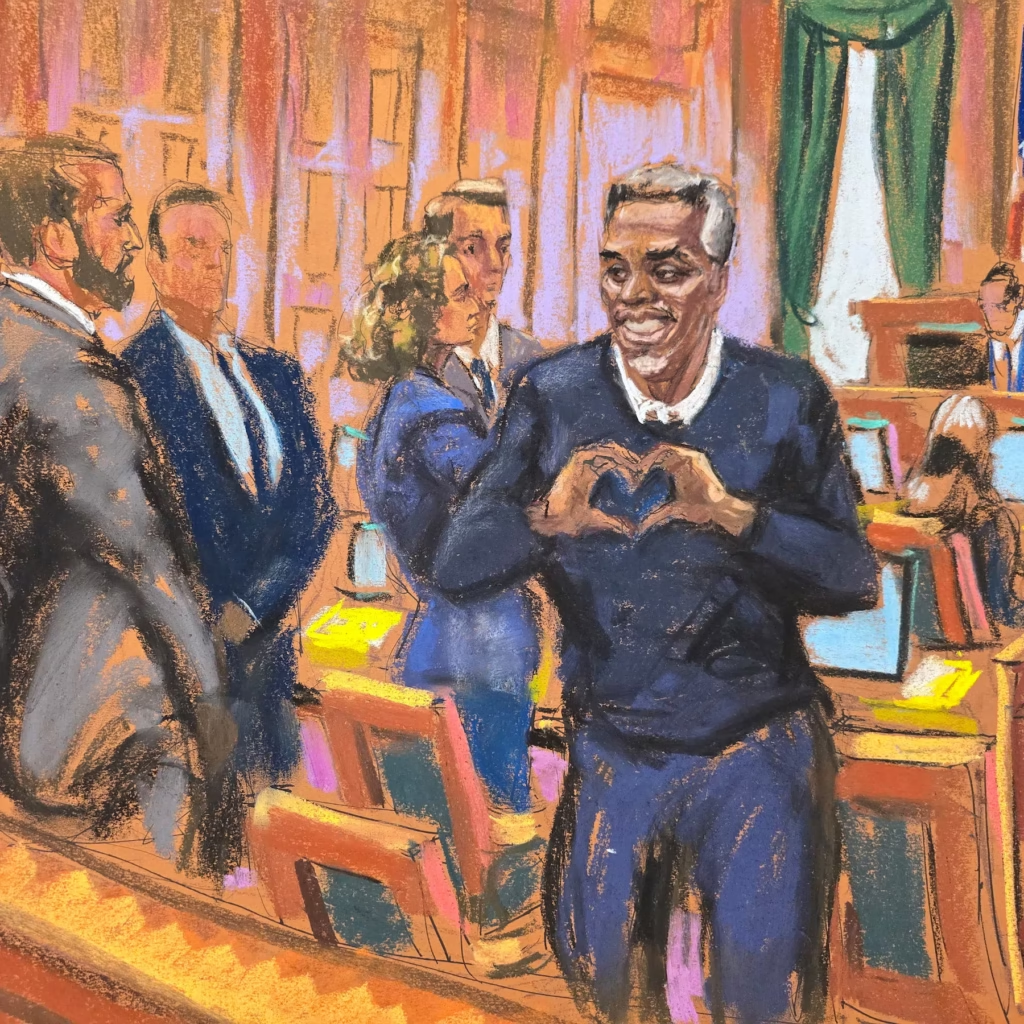
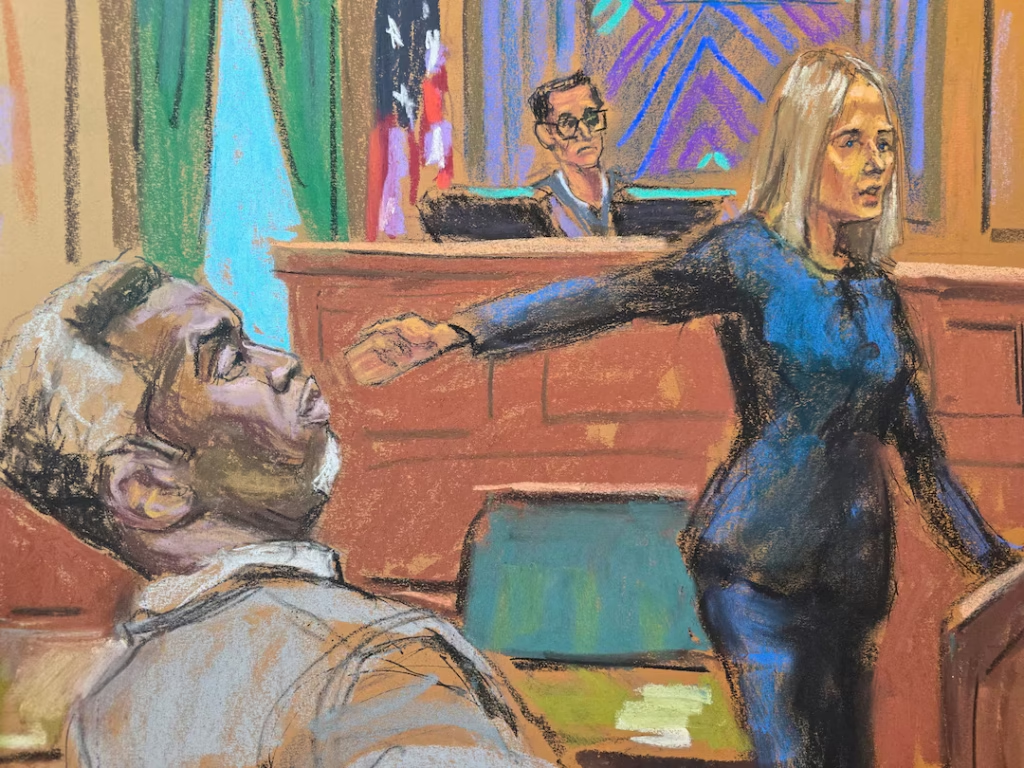
Witnesses, messages, videos, and physical evidence are now under scrutiny to prove that the so-called “Combs Enterprise” was not just theoretical—but real, profitable, and built on the exploitation of others.
This type of charge broadens the trial’s scope. It’s not just about what happened—it’s about how it happened and how often. The defense, on the other hand, is focused on dismantling the idea that such an organized operation existed at all, arguing that the evidence does not support the use of RICO laws.
As the jury continues to examine the evidence and deliberate, the Diddy trial is shaping up to be one of the most high-profile legal battles in recent memory—not just for the celebrity factor, but because it involves one of the most complex and far-reaching laws in American criminal justice.

The Truth About Ben Askren: Beyond the Octagon
Ben Askren, a well-known name in mixed martial arts (MMA), has sparked curiosity about his…

New Batman Trailer Sparks Shock and Awe
The latest trailer for the new Batman film delivers powerful visuals and intense atmosphere. Bruce…

11 Injured in Terrifying Knife Attack at Walmart
On Saturday afternoon, July 26, 2025, a 42-year-old man began randomly stabbing shoppers inside a…

From Iconic Star to Free Spirit: Lisa Bonet’s Rise
Lisa Bonet stands out as one of America’s most fascinating pop culture figures, known not…

One Final Shot: Chris Paul Returns Home
For over two decades, Chris Paul has embodied excellence, leadership, and sharp intelligence on the…

Fans Mourn the Sudden Death of TV Star Warner
The entertainment world is mourning the loss of Malcolm-Jamal Warner, beloved for his role as…